A hernia occurs when an internal organ or tissue pushes through a weak spot in the abdominal wall, often causing discomfort or a noticeable bulge. Managing physical activity is crucial, as certain movements can worsen the condition or delay healing. Understanding hernia exercises to avoid is essential for both recovery and prevention. Whether you’ve had surgery or are living with an untreated hernia, knowing which exercises to steer clear of can protect your abdominal strength and overall health.
Why Exercise Choices Matter with a Hernia
Choosing the right exercises when you have a hernia is not just about fitness—it’s about safety and preventing complications. Performing the wrong movements can increase intra-abdominal pressure, strain weakened tissues, and even cause a hernia to enlarge or recur. Understanding hernia exercises to avoid and exercises to prevent hernia is vital for maintaining strength while protecting your body.
- Protecting the abdominal wall: Exercises that excessively strain your core can weaken the abdominal wall further, making the hernia larger or more painful. Gentle, controlled movements allow you to stay active without putting unnecessary pressure on the affected area.
- Preventing recurrence: For post-surgery patients, choosing safe exercises is essential to avoid reopening the surgical site. Structured movements that engage muscles without forcing them to bulge outward are crucial for long-term recovery.
- Maintaining overall fitness: Avoiding harmful exercises doesn’t mean abandoning fitness. Low-impact activities and core-friendly movements can help you stay healthy while minimizing hernia risk, allowing you to retain strength, flexibility, and endurance safely.
Why Avoid Certain Exercises After Hernia Surgery
After hernia surgery, the abdominal muscles and surrounding tissues are still healing, making them vulnerable to strain and complications. Performing the wrong exercises too soon can lead to recurrence, increased pain, or delayed recovery. Knowing which hernia exercises to avoid, alongside exercise for hernia patients and exercises to avoid after hernia surgery, is essential for safe rehabilitation.
- Preventing strain on surgical repairs: Certain movements place undue pressure on stitches or mesh used during surgery. Exercises like heavy lifting or intense twisting can disrupt the repair, leading to complications or a new hernia.
- Reducing the risk of recurrence: Engaging in improper exercises too early can stretch the weakened abdominal wall, increasing the likelihood of the hernia returning. Safe, gradual activity supports tissue healing and strengthens surrounding muscles without causing damage.
- Promoting proper healing: Gentle and controlled movements enhance blood circulation, reduce stiffness, and support recovery. Avoiding high-impact exercises ensures the abdominal region has time to regain strength, making future exercises to prevent hernia more effective and safe.
- Maintaining overall fitness without harm: While it may be tempting to return to pre-surgery routines, selective low-impact activities allow patients to stay active without compromising recovery. This approach balances fitness goals with surgical safety.
5 Exercises You Need to Avoid
When living with a hernia or recovering from surgery, certain movements can put excessive pressure on the abdominal wall. Avoiding these exercises is critical for safety and long-term health. Understanding hernia exercises to avoid, exercise for hernia patients, and exercises to avoid after hernia surgery helps prevent complications while maintaining strength.
- Heavy Weight Lifting: Lifting heavy weights increases intra-abdominal pressure, which can push the hernia outward and strain healing tissue. Even experienced lifters risk recurrence or worsening of the hernia if proper precautions aren’t taken.
- Sit-Ups and Crunches: Traditional abdominal exercises, such as sit-ups and crunches, engage the core intensely and can force the hernia to bulge. These movements put direct stress on weakened abdominal areas, making them unsafe for both post-surgery patients and those with untreated hernias.
- Cardio (High-Impact Running or Jumping): High-impact cardio exercises generate repetitive abdominal pressure and jarring movements, which can aggravate the hernia. Activities like jumping rope, sprinting, or vigorous aerobics may worsen discomfort or delay recovery.
- Twisting and Rotational Movements: Movements involving sudden twists, pivots, or rotational force can strain the abdominal wall unevenly. Exercises like Russian twists or golf swings increase the risk of pulling on repaired tissue or enlarging the hernia.
- Planks and Leg Raises: While often recommended for core strengthening, planks and leg raises create prolonged tension on the abdominal muscles. For hernia patients, this can cause bulging, discomfort, and potential complications, making them exercises to avoid with hernia.
Safer Alternatives for People with Hernia
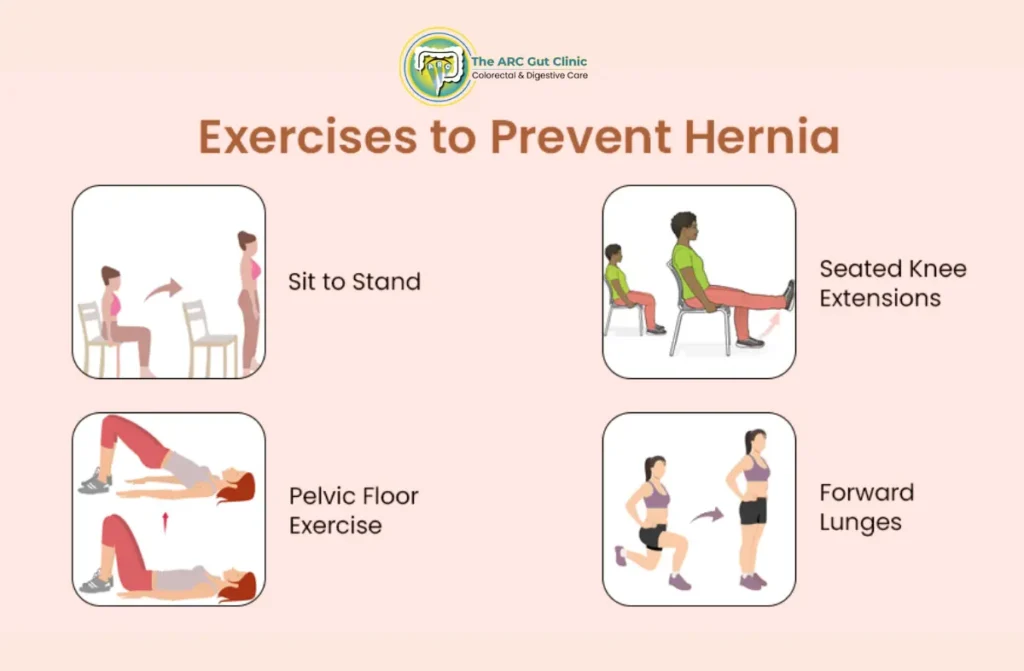
Even with a hernia or post-surgery recovery, staying active is possible by choosing exercises that are gentle on the abdominal wall. Safe movements allow patients to maintain strength, mobility, and overall fitness without risking complications. Understanding hernia exercises to avoid helps highlight the safer options for exercise for hernia patients and hernia patient exercise routines.
- Walking: Walking is low-impact and promotes circulation, aiding recovery and overall fitness. It engages core muscles gently without causing pressure on the hernia, making it an ideal activity for daily exercise.
- Swimming or Water Aerobics: Water-based exercises reduce strain on the abdomen due to buoyancy, while still providing resistance for building muscle strength. This controlled environment allows for safer movement compared to land-based workouts.
- Seated or Supported Core Exercises: Gentle core strengthening can be achieved with seated exercises, resistance bands, or stability balls. These methods engage abdominal muscles without overloading the repaired or weakened areas, making them safe alternatives to traditional crunches or planks.
- Low-Impact Cycling: Stationary or light cycling provides cardiovascular benefits and leg strengthening without excessive intra-abdominal pressure. Maintaining an upright posture further minimizes risk while keeping fitness levels consistent.
- Stretching and Flexibility Work: Controlled stretches, yoga poses, and gentle mobility exercises improve flexibility and blood flow without compromising the abdominal wall. Avoiding deep twists or bends ensures safety while supporting overall wellness.
Lifestyle Tips to Prevent Hernia from Worsening
Managing a hernia goes beyond exercises; lifestyle habits play a crucial role in preventing it from worsening. Combining safe activity with mindful daily choices helps protect the abdominal wall and supports overall recovery. Knowing hernia exercises to avoid alongside healthy habits ensures long-term wellness.
- Maintain a Healthy Weight: Excess weight increases pressure on the abdominal wall, aggravating hernias. A balanced diet and regular low-impact exercise help reduce strain and prevent the hernia from enlarging.
- Avoid Heavy Lifting: Lifting heavy objects suddenly or incorrectly can push the hernia outward. If lifting is unavoidable, use proper body mechanics, bend your knees, and keep the load close to your body.
- Eat High-Fiber Foods: Constipation and straining during bowel movements can worsen hernias. Including fiber-rich foods like fruits, vegetables, and whole grains helps maintain smooth digestion and reduces intra-abdominal pressure.
- Quit Smoking: Smoking can weaken connective tissue and slow healing after surgery. Avoiding tobacco improves tissue strength, recovery, and overall abdominal health.
- Listen to Your Body: Pain, swelling, or discomfort are signs to pause activities and reassess your routines. Adjusting exercises and daily habits based on symptoms prevents further complications and supports safer long-term fitness.
Tips for a Smooth Recovery
Recovering from a hernia requires patience, consistency, and mindful care. Following safe practices ensures that healing is effective and reduces the risk of recurrence. Incorporating hernia exercises to avoid alongside gentle activity supports exercise for hernia patients and overall recovery.
- Gradual Return to Activity: Start with light movements like walking or gentle stretching before progressing to more challenging exercises. Gradual increases in intensity prevent strain on healing tissues and allow the abdominal wall to strengthen safely.
- Support the Abdominal Area: Using a hernia belt or supportive garment can reduce stress on the affected area during daily activities. This provides stability, limits bulging, and promotes confidence while performing mild exercises.
- Stay Consistent with Safe Exercises: Regularly performing approved low-impact routines maintains muscle tone and circulation without jeopardizing recovery. Consistency helps rebuild strength while keeping the abdominal wall protected.
- Monitor for Symptoms: Watch for swelling, redness, or pain, which could indicate strain or recurrence. Immediate attention to warning signs ensures problems are addressed promptly and recovery stays on track.
- Follow Professional Guidance: Adhering to recommendations from a healthcare provider ensures exercises and activities align with your stage of recovery. Personalized guidance minimizes risks while maximizing safe rehabilitation.
Conclusion
Understanding hernia exercises to avoid is essential for anyone managing a hernia, whether post-surgery or untreated. Making safe exercise choices, adopting gentle alternatives, and maintaining healthy lifestyle habits protect the abdominal wall and support long-term recovery. Prioritizing mindful movement and gradual strengthening ensures you stay active without risking complications. Take control of your healing journey by choosing exercises that safeguard your hernia and promote lasting wellness.
Read also Can a Hernia Heal Itself Without Surgery.


